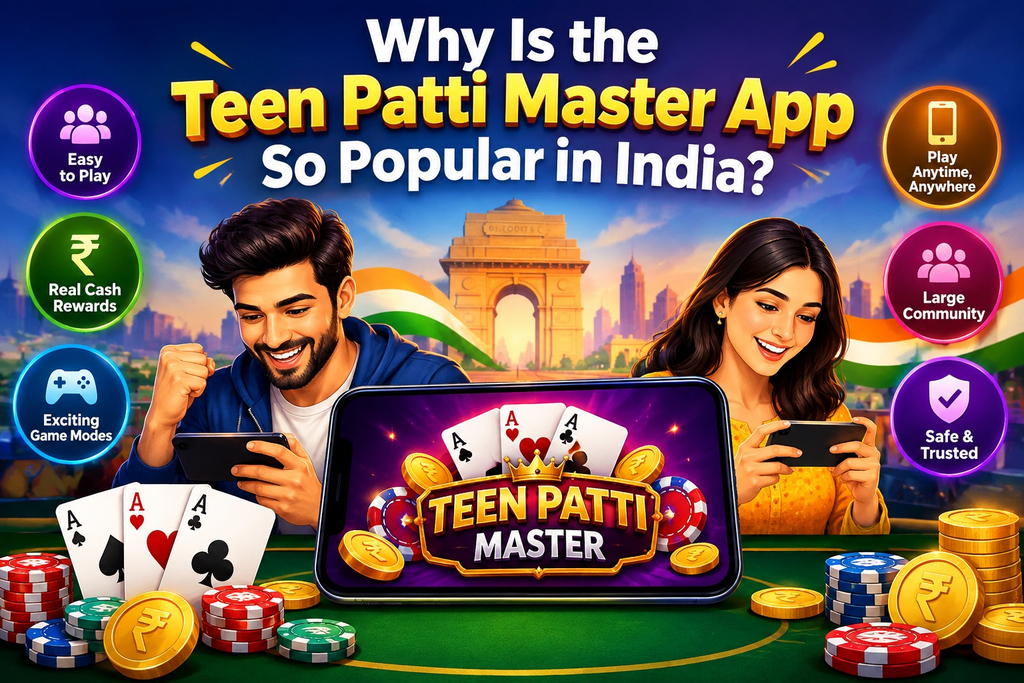
Teen Patti Master has attracted attention in India because it takes a card game many people already recognize and presents it in a convenient mobile format. Teen Patti has a long social connection with Indian families, friends, and festive gatherings, so the basic idea does not feel unfamiliar to many users. On a smartphone, that familiar game becomes easier to access without requiring a physical deck or everyone to be in the same place.
Its visibility also fits a larger change in Indian entertainment. Smartphones are now an everyday way to watch videos, communicate, and play games. Card-game apps suit this mobile-first behaviour because their controls are generally simple and their rules can be learned without specialized hardware.
In the case of Teen Patti Master, cultural familiarity, easy access, simple gameplay, mobile-friendly design, the broader growth of digital gaming all help explain why people search for and discuss the app.
Teen Patti Master Builds on a Game Indians Already Know
One of the strongest reasons for the app’s visibility is the game behind it. Teen Patti is not a completely new concept introduced by smartphones. It has been played socially in India for generations and is particularly familiar around gatherings and festivals.
That existing awareness lowers the learning barrier. Someone who has watched relatives or friends play Teen Patti may already understand that each player receives three cards and that combinations such as a trail, sequence, color, pair, or high card determine hand strength.
Even users who have never played can understand the core structure relatively quickly. There are fewer controls to learn than in many action or strategy games.
A digital app therefore starts with an advantage that an entirely new game does not have: recognition. The software changes how the game is accessed, but the basic card-game identity remains familiar.
Why the Teen Patti Master Mobile Format Feels Convenient
Traditional card games usually require cards, a suitable place, and other people who are available at the same time. A mobile app removes much of that preparation.
Users can open the app from a phone and access the available game interface directly. The software handles dealing, table presentation, turn order, and hand comparison according to the selected mode’s rules.
This convenience matches the way people use smartphones. Many mobile activities happen in short periods rather than in long planned sessions. Card games can fit this pattern because individual rounds can be comparatively short and the controls are usually based on simple taps.
Convenience should not be confused with a reason to play continuously. Easy access makes personal time limits more important. Still, from a product-design perspective, the ability to turn a familiar physical game into an on-demand mobile experience is a major reason card-game apps attract attention.
Simple Teen Patti Master Gameplay Helps New Users Start
Complex games can require lengthy tutorials before a player feels comfortable. Teen Patti has a relatively compact set of fundamentals.
In the traditional format, players receive three cards. They can usually participate blind, meaning without looking at their cards, or seen after checking the hand. Players continue according to the table’s betting rules or pack when they no longer want to remain in the round.
The card rankings are also manageable. A trail or trio generally sits at the top of the standard ranking system, followed by combinations such as pure sequence, sequence, color, pair, and high card.
Digital variations can change certain rules, so users still need to read the instructions for the table they join. However, the overall learning curve remains approachable.
That balance—simple enough to begin quickly but uncertain enough that every hand can feel different—helps explain the continuing appeal of the game.
Teen Patti Master Fits India’s Smartphone-First Gaming Culture
India’s digital gaming audience has grown alongside affordable smartphones and mobile internet. For a large number of users, the phone is the primary gaming device rather than a console or gaming computer.
Card games are well suited to this environment. They do not require complicated physical controls, and their visual elements can be presented clearly on a relatively small screen. Cards, player positions, action buttons, and table information can all fit into a portrait or landscape mobile layout.
A mobile-first product can also be updated without changing the underlying game. Developers can reorganize menus, improve compatibility, adjust loading behaviour, or refresh graphics while keeping the recognizable Teen Patti structure.
This combination of familiar gameplay and modern delivery makes card-game apps a natural part of India’s wider mobile-entertainment ecosystem.
Familiar Words and Local Context Make the App Easier to Understand
Indian card gaming has its own familiar vocabulary. Terms such as blind, seen, chaal, pack, show, pair, and sequence are widely used around Teen Patti.
When a digital interface uses terminology that players already recognize, less explanation is required. This can make the transition from an offline card table to a phone screen feel more natural.
Localization can strengthen that effect. India is multilingual, so clear language in menus, rules, help pages, and tutorials can make an app more accessible to users with different language preferences.
Good localization is not only about translating individual buttons. Instructions need to remain understandable, examples should make sense in context, and important account or safety information should be written clearly.
Apps that communicate in a familiar way can feel less intimidating to people who are not regular users of complex digital games.
Visual Design Makes Traditional Card Play Feel More Modern
A physical deck is simple, but a mobile game can add animation, sound, table themes, icons, menus, and visual feedback.
These design elements help convert an old card game into a contemporary digital product. A well-organized interface can show whose turn it is, whether a player is blind or seen, what actions are available, and how the current round is progressing.
The key is balance. Too little information can confuse new players, while too many banners and buttons can make the interface difficult to navigate.
Returning users also value consistency. When updates significantly move familiar controls, people may initially prefer an older layout simply because they remember it.
For this reason, usability matters as much as visual style. The most effective design helps players understand the game quickly instead of distracting them from it.
Teen Patti Master Can Appeal to Both Beginners and Experienced Players
A traditional game can serve different experience levels without changing its basic identity.
Beginners can focus on learning card rankings, understanding blind and seen play, and recognizing when a round begins or ends. Experienced players already know these fundamentals and may pay more attention to table rules, other players’ decisions, and their own risk limits.
This creates a broad potential audience. The app does not have to be designed exclusively for expert gamers.
However, experience should not be confused with guaranteed success. Teen Patti includes random card distribution and hidden information. A player who understands the rules can make more informed decisions, but cannot control the cards that are dealt.
That uncertainty is part of what keeps individual rounds from feeling identical.
The Wider Growth of Indian Digital Gaming Creates More Visibility
Teen Patti Master exists within a much larger Indian gaming ecosystem. Mobile gaming spans casual titles, puzzles, board games, card games, e-sports, and other entertainment formats.
As more people use smartphones for entertainment, games are discovered through search engines, videos, social discussions, recommendations, and websites. Traditional Indian games have an advantage because their names and basic concepts are already recognizable.
This wider digital shift also increases competition. Developers need to compete on usability, reliability, support, safety, and overall experience rather than depending on a familiar name alone.
Current Indian Gaming Rules Are Important for Teen Patti Master Users
The regulatory environment around online gaming in India has changed, so older articles can give readers an outdated picture of the market.
India’s Promotion and Regulation of Online Gaming Act, 2025 created a national framework that distinguishes permitted categories such as e-sports and online social games from prohibited online money games. The framework was brought into force in 2026.
That distinction matters when discussing any card-game app. The name of a traditional game does not by itself determine how every digital mode is classified. Users should understand the nature of the service they are accessing and check current legal requirements applicable to them.
For the industry, regulation also places more emphasis on compliant formats, transparent product design, and user protection.
Popularity is therefore only one part of the story. Sustainable digital gaming also depends on whether products operate within the rules that apply to the market.
Trust and Download Safety Influence Long-Term Popularity
An app can attract attention quickly, but keeping users requires trust. People want software that works reliably, explains its rules, provides understandable account information, and offers a legitimate route for support.
Download safety is especially important for Android users. APK files can be redistributed by third parties, and a familiar app name does not prove that every file is genuine. Users should verify the source, review Android warnings, and avoid modified packages promising unrealistic features.
Passwords, OTPs, payment PINs, and other private credentials should never be shared with unofficial agents or strangers. A recognizable name may encourage someone to try an app, but security and reliability influence whether that trust lasts.
Responsible Play Matters Even With a Familiar Game
A familiar card game can feel casual, but users should still maintain healthy limits around time and money.
If a digital version includes any financial component, users need to understand the applicable rules and current legal framework before participating. They should never treat card-game outcomes as a guaranteed source of income.
Teen Patti involves random cards. No pattern, betting system, app version, or strategy can guarantee a winning hand.
Setting a session limit is useful even in non-money social play because mobile apps are always accessible. Regular breaks can help keep gaming as entertainment rather than an automatic habit.
Players should also respect age requirements and use responsible-play or support resources when appropriate.
The fact that a game is culturally familiar does not remove the need for informed, controlled use.
Why Teen Patti Master Continues to Attract Attention
When all of these factors are considered together, the app’s appeal becomes easier to understand.
Teen Patti begins with cultural recognition. Smartphones add convenience. Simple controls lower the learning barrier. Familiar terminology helps users understand the table. Digital presentation makes the traditional game feel current, while updates allow the software to evolve with mobile devices.
The wider Indian gaming market provides a large audience already comfortable with mobile entertainment. Search, social content, and online recommendations make game discovery easier than it was in the era of purely offline play.
None of these factors alone guarantees long-term popularity. Users still expect stable performance, clear rules, trustworthy downloads, useful support, and responsible design.
The strongest advantage is therefore the combination of something familiar with a format that suits modern digital habits.
Final Thoughts
Teen Patti Master is a useful example of how a traditional Indian card game can find a new audience through mobile technology. Its popularity is not simply about putting three cards on a screen. The app benefits from a game people recognize, straightforward rules, touchscreen-friendly interaction, cultural familiarity, and India’s wider move toward smartphone entertainment.
For new users, the attraction is accessibility. They can learn the basics without mastering a complex control system. For people who already know Teen Patti, the mobile version offers a familiar game in a more convenient digital format.
At the same time, today’s online-gaming environment requires more awareness than before. Users should pay attention to current regulations, app authenticity, privacy, account security, and responsible-play practices.
Ultimately, the continuing interest around Teen Patti Master shows the strength of combining traditional entertainment with modern technology. Familiarity may bring people to the game, but a clear, reliable, safe, and user-friendly experience is what can keep a digital card-game product relevant over time.