Stoppage time goals U/O is a specialized football betting market that focuses on goals scored during added time at the end of a match. For readers exploring this niche option through tỷ lệ cá cược bóng đá, understanding the settlement period, goal lines, and market structure is essential. A clear grasp of these fundamentals makes it easier to follow how each over or under selection is determined.
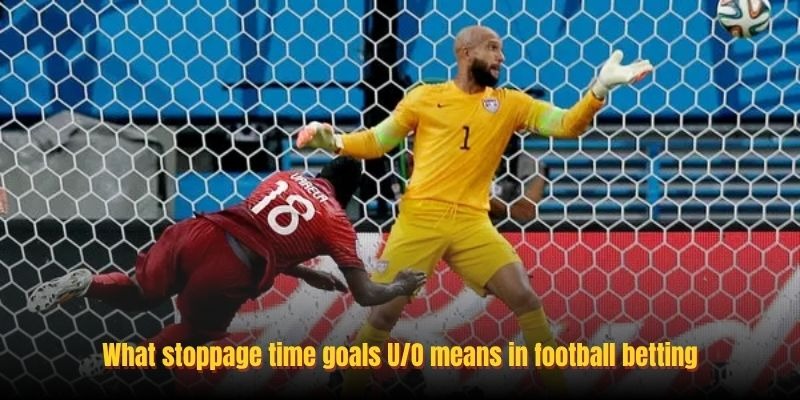
What stoppage time goals U/O means in football betting
Stoppage time goals U/O refers to an over/under market that focuses specifically on goals scored during the additional minutes played after the regulation 90 minutes. For readers exploring this market through tỷ lệ cá cược bóng đá, understanding the settlement period and goal-line structure is important before interpreting the available options.
The meaning of stoppage time in football
Stoppage time represents the additional period awarded by the referee after interruptions during normal playing time, and it can vary considerably from one match to another.
- Added minutes are announced near the end of each half.
- The duration depends on factors such as substitutions, injuries, VAR checks, and time-wasting.
- Only goals that occur within the defined stoppage-time period are relevant to this specialized market.
- The exact settlement rules can vary between betting operators.
The meaning of the U/O market
The U/O abbreviation stands for Under/Over, allowing players to predict whether the number of qualifying goals will fall below or exceed a specified line.
- An Over selection requires the final number of relevant goals to exceed the listed threshold.
- An Under selection requires the total to remain below that threshold.
- Common goal lines may include 0.5, 1.5, or other values depending on the market.
- The applicable line and settlement conditions should always be reviewed before making a selection.
How goals are counted
The key distinction is that Stoppage time goals U/O does not normally assess every goal scored throughout the fixture. Instead, the market concentrates on goals that meet the operator’s stated timing criteria.
- Goals scored during regular playing time are generally excluded from the added-time count.
- A goal scored within the designated stoppage-time period may qualify.
- Events occurring around halftime or full-time require attention to the operator’s settlement definition.
- Official match timing is typically used to determine whether a goal falls within the relevant period.
Why the market can be difficult to predict
Added time is inherently variable, meaning the available scoring window cannot always be known precisely before the match reaches its closing stages.
- Longer stoppage periods create more opportunity for attacking sequences.
- Teams trailing late in the game may commit additional players forward.
- Defensive mistakes can become more frequent as players tire.
- A team protecting a narrow lead may adopt a more conservative approach.
- Substitutions and injury interruptions can extend the final phase unexpectedly.
Read More: Mega 6/45 Lotto: Key Rules, Draws, And Winning Combinations
Common U/O lines used for added-time goal markets
Added-time goal markets can use different over/under thresholds depending on how the operator structures a particular fixture. For readers comparing Stoppage time goals U/O options through tỷ lệ cá cược bóng đá, the table below outlines several common lines and how they are generally interpreted.
| U/O line | Over selection | Under selection | General interpretation |
| 0.5 goals | At least 1 qualifying goal is scored | No qualifying goal is scored | A simple yes/no style market for late scoring |
| 1.5 goals | 2 or more qualifying goals are recorded | 0 or 1 qualifying goal is recorded | Requires multiple goals during the relevant period for Over |
| 2.5 goals | 3 or more qualifying goals occur | 0, 1, or 2 qualifying goals occur | A higher threshold with greater scoring requirements |
| 3.5 goals | 4 or more qualifying goals are recorded | 0–3 qualifying goals are recorded | Usually represents a more demanding Over line |
| Alternative lines | The required goal count exceeds the listed threshold | The total remains below the listed threshold | Availability depends on the specific fixture and bookmaker |
Key factors that may influence stoppage time goals U/O
Several match conditions can shape the likelihood of goals arriving during the closing minutes, making context especially important when assessing Stoppage time goals U/O. For readers comparing this market through tỷ lệ cá cược bóng đá, examining team behavior, scoreline pressure, and the expected length of added time can provide useful context.
Current scoreline and match situation
The scoreboard often has a direct influence on how aggressively teams approach the final phase, particularly when the result remains within reach for either side.
- A team trailing by one goal may increase attacking pressure.
- A level score can encourage both sides to search for a decisive breakthrough.
- A narrow lead may lead the winning side to defend deeper.
- A comfortable advantage can reduce the incentive for further attacking play.
Amount of stoppage time awarded
The length of added time is another important variable because a longer window naturally provides more opportunities for meaningful attacking sequences.
- Injury treatment can extend the second-half stoppage period.
- VAR reviews may contribute additional minutes.
- Multiple substitutions can increase the amount of added time.
- Frequent interruptions may create a significantly longer closing phase.
Team attacking intensity
The way both sides approach the closing stages can influence the number of genuine scoring opportunities available. Stoppage time goals U/O therefore requires more than simply looking at each team’s overall scoring record.
- High-tempo teams may continue creating chances late in matches.
- Direct play can increase the frequency of crosses and set pieces.
- Teams chasing an equalizer often commit more players forward.
- Aggressive pressing can force defensive errors when fatigue sets in.
Player fatigue and defensive concentration
Physical exhaustion becomes increasingly relevant as players approach the end of a demanding fixture. Stoppage time goals U/O may therefore be affected by declining defensive coordination.
- Tired defenders may struggle to maintain their positioning.
- Reduced concentration can lead to misplaced passes.
- Fatigue may slow recovery runs during counterattacks.
- Goalkeepers can face greater pressure from repeated late deliveries.
Set pieces and late attacking opportunities
Corners, free kicks, and long throws can become especially valuable during the final moments when a team needs to force a result.
- Trailing teams may commit extra players into the box.
- Repeated corners can sustain pressure for several phases.
- Free kicks near the penalty area can create high-value opportunities.
- Second-ball situations may produce unexpected chances.

Conclusion
Understanding the main factors behind Stoppage time goals U/O makes this niche market easier to assess in its proper context. Readers using https://tylecacuocbongda.io/ can pay closer attention to the scoreline, tactical shifts, added-time duration, and late attacking pressure before evaluating the available options. A disciplined approach built around relevant match information can provide a more structured way to interpret this specialized market.
Read more related blogs on Instagram Bio Style Generator. Also join WhatsApp for more update.